Imagine giving your friends a loan. Before giving them the money, you do a thorough assessment of their reliability, correct? In a sense, you’re acting as a credit analyser. Imagine now, but on a far larger scale, a fund manager doing the same thing. A credit risk fund essentially performs that function.
With a twist, these funds engage in debt securities investments. They investigate borrowers’ creditworthiness in great detail rather than just concentrating on interest income. Comparable to a detective narrative, the fund manager assumes the role of the investigator, delving into the financial well-being of businesses to identify prospective hazards and benefits.
CREDIT RISK MUTUAL FUNDS: DEFINITON!
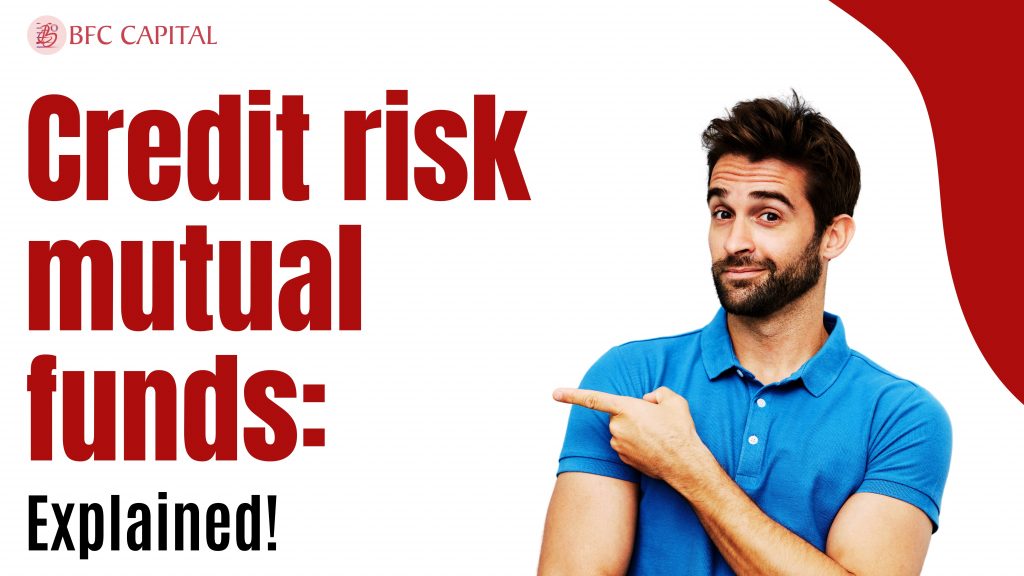
Debt funds that invest in debt instruments with poor credit quality are known as credit-risk mutual funds. Since these funds make investments in subpar securities, their risks are higher.
Interest rates for securities with a low credit rating are often higher. Generally speaking, securities rated lower than AA are seen as having a larger credit risk. This may benefit the fund’s net asset value (NAV).
CREDIT RISK MUTUAL FUNDS: FEATURES!
Stated below are some of the more notable features and elements of a credit-risk mutual fund:
- The fund manager has a big impact on how well the fund performs. He picks which low-rated assets to buy after analyzing the credit quality of the instrument.
HOW DO FUNDS FOR CREDIT RISK OPERATE?
This is how mutual funds with credit risk operate:
- Credit risk funds purchase securities that have lower ratings from credit rating organisations.
- Due to a higher likelihood of default or payment delay, these securities carry higher interest rates than those with higher ratings.
- When these securities’ ratings rise, or the market views them as less risky, credit risk funds gain from capital appreciation.
- Credit risk funds receive regular income from the interest payments on these securities.
The hazards associated with credit-risk funds are interest rate risk, credit risk, and liquidity risk!
THE RISKS INVOLVED WITH CREDIT RISK MUTUAL FUNDS
- The default risk refers to the potential for the issuer of the security to fail to make timely payments of principle and/or interest. A higher default risk is associated with low-rated assets because of their diminished creditworthiness and higher probability of defaulting or making late payments. A default could mean loss of revenue for stakeholders in the fund and an overall low NAV!
- The danger of a lowered credit rating of a security due to a deterioration in the issuer’s financial status or performance is known as the “downgrade risk.” A downgrade could harm the investment’s market value, liquidity, and reputation in addition to the fund’s performance and reputation.
- Liquidity risk: This is the chance that the fund won’t have enough buyers or favourable market circumstances to enable it to sell the securities quickly or at a fair price. Because low-rated securities have less demand and a wider market spread, they carry a larger liquidity risk. The fund’s capacity to fulfil redemption requests and rebalance the portfolio may be hampered by insufficient liquidity.
- Interest rate risk: This is the chance that changes in market interest rates will have an impact on the fund’s value and returns. Since credit risk funds invest in securities with shorter maturities and greater yields than other debt funds, their interest rate risk is smaller. Interest rate risk does, however, still exist because the fund’s returns are subject to change based on the direction and strength of changes in interest rates.
CREDIT RISK MUTUAL FUNDS: AN APPROPRIATE INVESTMENT?
Investors in these funds can benefit from the following advantages:
Enhanced Profitability
When compared to credit risk funds, debt mutual funds that hold higher-rated bonds may perform worse. If the underlying securities of these funds do well, they may also pay dividends on a reasonably regular basis. Your short- to medium-term financial objectives might be able to be met with their assistance.
Tax Treatment
Any profit will be clubbed with your income and taxed at your effective slab rate.
FACTORS TO CONSIDER
Considerations to make before investing in credit-risk mutual funds in India The following things should be considered before purchasing a credit-risk mutual fund:
- Investment objective: Credit-risk mutual funds have higher returns than other debt funds, which makes them perfect for investors who can take on a lot of risk.
- Investment horizon: Credit-risk mutual funds require an investment horizon of at least three years because of their considerable short-term volatility and unpredictability.
- Fund performance: Credit risk mutual funds should be evaluated using past performance, consistency, and risk-adjusted returns across a range of time periods. However, past performance does not guarantee future results.
- Fund manager: Credit-risk mutual funds should be managed by fund managers with a proven track record of selecting and supervising low-rated assets.
- Credit quality: credit risk funds majorly invest in low rated funds with some high rated sections providing benefit of diversification and optimise the risk-return trade-off.
- Exit load: Units in credit risk mutual funds may be subject to an exit load if they are redeemed before a specified period of time, usually one year.
ON A PARTING NOTE..
Credit risk funds can be an attractive alternative to traditional investing options despite their inherent dangers. It’s important to comprehend the assets’ underlying credit quality, even if they could yield better yields. These funds may be of interest to long-term investors who have a higher risk tolerance. To make wise investing selections, it is advised to conduct in-depth research or seek expert guidance.
To learn more about mutual funds, contact us via Phone, WhatsApp, or Email, or visit our website. Additionally, you can download the Prodigy Pro app to start investing today!
Disclaimer – This article is for educational purposes only and does not intend to substitute expert guidance. Mutual fund investments are subject to market risks. Please read all the scheme-related documents carefully before investing!