Capital Gains Tax
Have you been investing in the stock market for a long time? Then taxation would be a very interesting topic for you. But we have seen that beginners often misunderstand the parts of tax. No matter what kind of investment you are doing—it could be stock, it could be any other financial instrument—capital gains tax is mandatory to understand. Believe us, once you start investing, talking about taxation will no longer be a scary topic for you.
Are you trying to learn more about capital gains tax? How would it work? And what are the rates in 2025? Then you are at the correct place. Let’s understand them right below.
What is CGT, or capital gains tax?
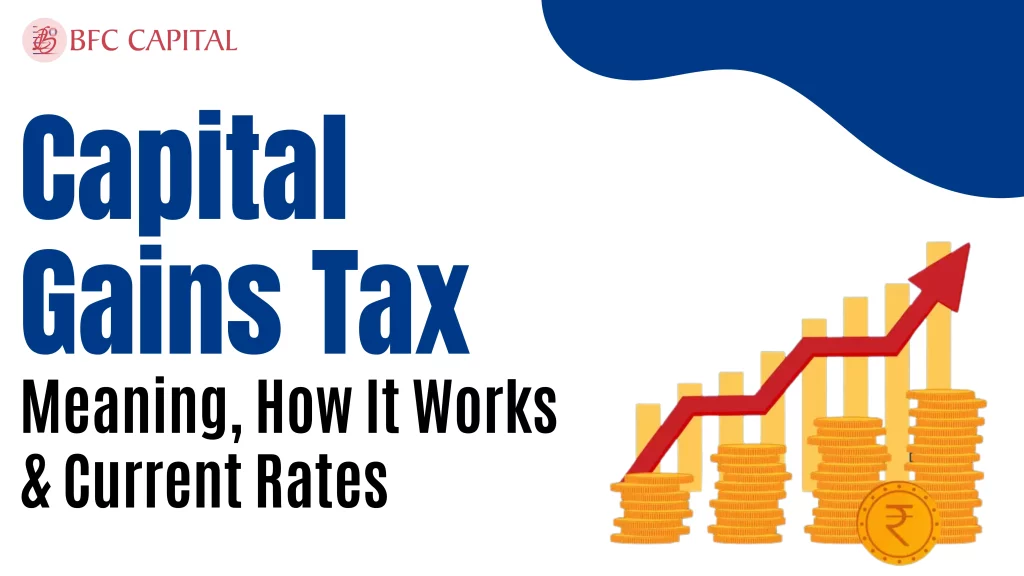
Understanding capital gains tax is easy. It is nothing but the tax you pay when you get a profit while selling your investments that have increased in value. Generally, we pay capital gains tax on common assets like bonds, stocks, real estate, cryptocurrency, business assets, and more.
Now, understand this with an example. Just assume, a few years ago, you bought XYZ stock for 1,000 Rs. Now you are selling it for 2,500 Rs. Now that 1,500 Rs is your profit, which is called capital gain. But don’t worry, you don’t have to pay tax on the entire amount of 2,500 Rs. As it’s a taxation on your gain, which is 1,500 Rs.
How Does This Capital Gain Tax Work?
Capital gains tax is divided into two parts. One is short-term capital gain, and the other one is long-term capital gain. The taxation rate in 2025 is different for both types. Now let’s get to know both of them first.
When you hold an asset for more than 1 year, you go under the long-term capital gain tax rate. The rates are comparatively lower here. For equity-oriented instruments, long-term capital gains (LTCG) are taxed at 12.5% on gains exceeding ₹1.25 lakh.
When you hold an asset for 1 year or less, your profit is a short-term capital gain. Compared to long-term, short-term capital gains are subject to more taxation. For equity-oriented assets, short-term capital gains (STCG) are taxed at 20%. But for debt mutual funds purchased after April 1, 2023, indexation benefits have been removed, and they are taxed as per slab rates, similar to STCG.
Things to Keep in Mind
Investment is always about smart decisions. Making smart decisions will be impossible unless you avoid the latest news in the market. But when you are investing in any kind of financial instrument and expecting to have a good capital gain, then taxation will always be there. In such cases, you must keep a few things in mind.
- Try to hold your investment longer because you can enjoy the advantage of lower tax rates.
- Always pay attention to income thresholds; it will help you avoid higher tax rates.
- Try to plan when you invest in high-value assets, real estate, or businesses.
Strategies to Avoid Tax
As we already said, when you hold your investment for a long time, you will automatically save on taxes. Nowadays, a lot of options are given by the government of India to limit your capital gain tax flow; try to use the best option and stop paying unnecessary tax expenditures.
Wrapping Up
Before making any kind of investment in the stock market, always set your goal and choose your financial instrument. Remember, taxation might not be a big thing when you are investing a small amount, but with a capital gain, that small amount can turn huge, and at that time, paying tax will be a matter of worry. So, always consider talking to a tax professional before making any kind of major financial move. The tax law changes often; therefore, it is always a good idea to double-check your strategy. The more you are going to understand how this capital gain tax works, the better you can build your wealth, so keep going.
Please share your thoughts on this post by leaving a reply in the comments section. Contact us via Phone, WhatsApp, or Email to learn more about mutual funds, or visit our website. Alternatively, you can download the Prodigy Pro app to start investing today!
Disclaimer – This article is for educational purposes only and does not intend to substitute expert guidance. Mutual fund investments are subject to market risks. Please read the scheme-related document carefully before investing.