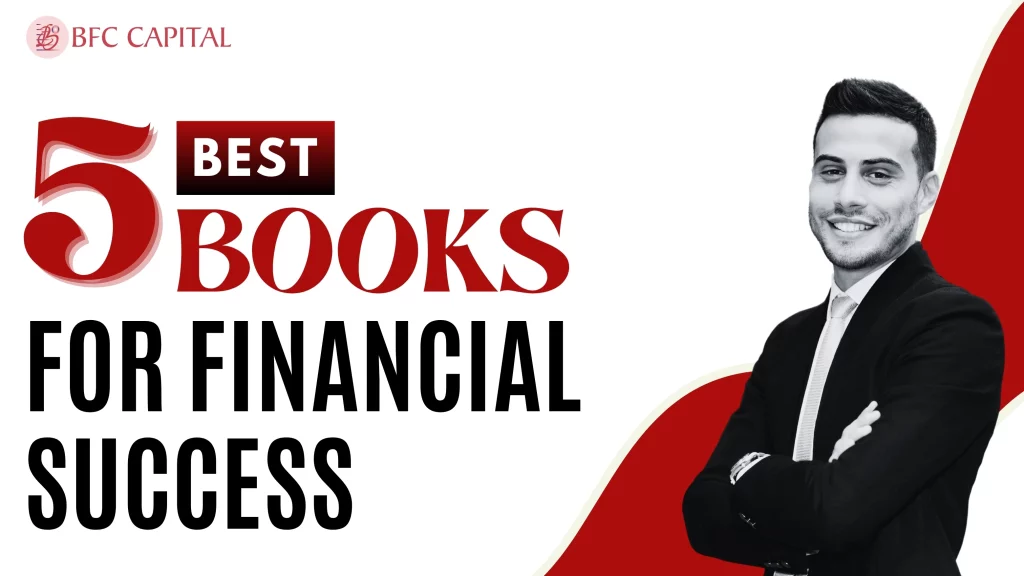
Regarding money, it sure complicates things. From knowing how to invest to managing day-to-day expenses, almost all people have not had the privilege of having a personal finance manual handed to them when they were kids. But here comes the magic: Top Five finance books can change one’s whole mindset toward money and lay the building blocks for complete financial independence.
If you are an undergraduate student confused about how to budget or someone wanting to break the vicious cycle of being in debt, these books can assist you. Let’s dive into best finance books of all time that have stood the test of time in imparting knowledge, good practical tips, and inspiring tales, perfect for anybody who wants to better their money literacy.
Top 5 Finance Books in 2025
Explore the Top 5 Finance Books in 2025 to boost your money skills, learn smart investing, and take control of your financial future.
1. Rich Dad Poor Dad by Robert Kiyosaki
If there’s a book that imparts curiosity about financial education in the young mind, it is surely this one.
Why you should read it:
Rich Dad Poor Dad is a story where one father is rich (the “rich dad”) and the other one is poor; where the first has financial knowledge but the second believes in working his whole life through the nine-to-five trap one is left by society.
While this book doesn’t provide budget-spreadsheet routines or branded investment strategies from the first day, it instead changes your way of thinking about money.
What you should understand:
Assets put money in your pockets, liabilities take money out. Simple as that- and life-changing.
What you will learn:
- The significance of financial literacy
- Transitioning from working for money to getting money to do the work for you.
- Basics of asset building and why your home isn’t an asset.
Not about earning more; it’s about thinking differently. This book builds the foundation of your money mindset and sets the tone for wealth creation.
2. The Intelligent Investor by Benjamin Graham
Moving on to something more serious for those who want to pass beyond understanding investing via Instagram reels and YouTube hacks.
Must-read status:
The Intelligent Investor was written by Benjamin Graham, the mentor of Warren Buffett. This book could never be fast. It doesn’t lure you with promises of quick riches. The emphasis is placed on long-term investing and logical decision-making.
An easy example:
You are buying mangoes. One vendor sells a mango for ₹100; this is sky-high pricing due to all the media hype. Another vendor sells that quality mango for ₹50-considerably less media. Which is a better value? Graham would like you to consider investments like that-very calculated and very rational.
What you’ll learn:
- Investing based on value rather than speculation
- How to avoid emotional investing
- The way to build wealth over time instead of overnight
Certainly, challenging to read, yet even just selected chapters can well change your financial planning game.
3. The Total Money Makeover by Dave Ramsey
Debt is a very heavy burden, but if it is threatening to crush you, hang on because this one is for you. Reading this book is worth it for one reason: Dave Ramsey gives you honest reality in life without candy coating it. This book outlines how to get out of debt, create an emergency fund, and then live a financially free life with a step-by-step guide.
For beginners:
Begin with it: Start paying the smallest of available dues. Once momentum builds up, get on to the next item in the to-do list. That’s how debt snowball operates.
What you learn here:
- Bullet-proof debt management plans
- How to build and sustain an emergency fund
- Planning of the budget and smart cash flow management:
The beauty of Ramsey’s approach is that it really is simplicity and discipline at its best. It is great for anyone needing a financial rehab party.
4. Think and Grow Rich by Napoleon Hill
Like, how can a book that is supposed to sound something like a motivational seminar be ascribed as a finance book? Let’s talk about it.
Why you’d want to read it:
It was originally published in 1937. Think and Grow Rich is not only about earning; it’s also about developing a powerful mental atmosphere for attracting success.
Simple example:
Ever observed that some people have everything falling into their own respective places? This is certainly not because of sheer luck; it’s all about focus and belief on a specific goal. Hill studied successful people’s lives and found some really common traits: clarity, persistence, and definite purpose.
What you’ll learn:
- Strengthening your money mindset.
- The psychology of making wealth.
- Having a clear vision will create real results in the real world.
It perhaps doesn’t give precise budgeting techniques, but creates the state of mind necessary to submit to the budget
5. The Nature of Money by Alfred Mitchell-Innes
Lesser-known, but it is a goldmine for the understanding of the why behind monetary systems.
Why it’s a must-read: The Nature of Money dives into how money is created, valued, and circulated. Contrary to books that teach you what to do with money, this one teaches you what money is.
The simple takeaway: Nowadays, money does not have gold or silver backing; rather, it is a matter of trust and exchange. This understanding gives you an advantage for better financial planning.
What you will learn:
- What gives money value
- How modern financial systems function
- A macroeconomic and financial literacy perspective
Once you master the ideas found in here, you will be capable of making better choices with long-term investments, saving, and even cryptocurrencies.
Wrapping It All Up: Why These 5 Finance Books Matter
Each of these personal finance books targets a different area of your money journey:
| Book Title | Focus Area | Ideal For |
| Rich Dad Poor Dad | Money mindset, financial basics | Beginners who want to rethink money |
| The Intelligent Investor | Value investing, long-term strategies | Intermediate investors |
| The Total Money Makeover | Debt management, budgeting | People in financial distress |
| Think and Grow Rich | Wealth creation, goal setting | Anyone looking to level up their mindset |
| The Nature of Money | Financial education, theory | Advanced learners and curious thinkers |
As said, reading these books would not turn you into a millionaire overnight, but they would equip you to:
- Populate an All-Important Financial Beginning
- Control Cash Flow Management
- Become a Budgeting Master
- Finishing Off Financial Literacy For A Life
- Confidently Move Towards Financial Freedom
Real Talk: Where to Start?
Rich Dad Poor Dad initiates the understanding of dualism for anyone unfamiliar with personal finance. It is simple, relatable, and can rewire how you look at wealth.
Feeling the motivation to repair the damage that debt has done to your savings? Check out The Total Money Makeover.
Investing sounds good, but are you ready for the next level? The Intelligent Investor will definitely be of service.
And if you would care to learn about the origin of money or perhaps take a deep dive into the theory of finance, The Nature of Money is your hidden gem.
Need that shot in the mind’s output? You cannot go wrong with Think and Grow Rich.
Final Thoughts: Financial Books Are Your Best Financial Advisors
In a world brimming with money-savvy influencers, viral advice, and hacks, books continue to be the most trustworthy mentors. Such books, for less than what would cost an extravagant gala dinner, yield dividends for a lifetime.
Personal finance is not about perfection in handling money; rather, it’s about doing it intentionally. And these Finance Books help you to do it, step by step.
So, grab one of these Finance Books this weekend. Brew that cup of coffee. Switch off notifications. And take your first page toward your financial independence.
Who knows? A single chapter may just change your life.
Please share your thoughts on this post by leaving a reply in the comments section. Contact us via phone, WhatsApp, or email to learn more about mutual funds, or visit our website. Alternatively, you can download the Prodigy Pro app to start investing today!
Disclaimer – This article is for educational purposes only and does not intend to substitute expert guidance. Mutual fund investments are subject to market risks. Please read the scheme-related document carefully before investing.