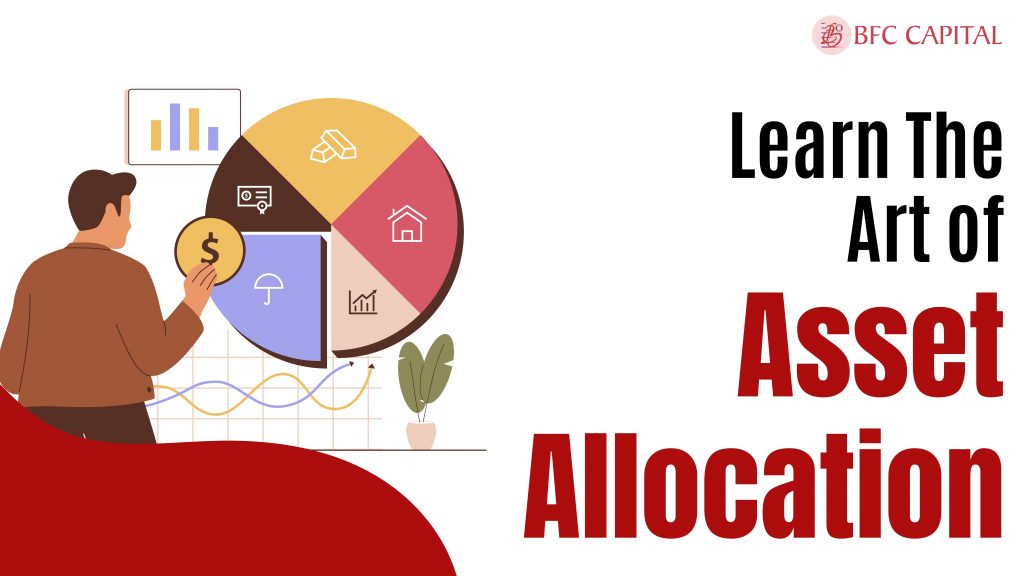
Understanding the Basics of Asset Allocation
Learning to diversify your investments among things like stocks, bonds, and other assets classes is called asset allocation. This helps you make better returns while also keeping your risk low.
The basic idea is that various asset classes, such as equities and bonds, behave differently in market scenarios; for instance, stocks may give more potential for growth but also involve more risk, while bonds usually offer more stability and income.
When you invest into different things, you can make your investment less risky. This is because if one thing does not do well, it might be made up by something else doing better.
Diversification matters in Asset allocation
Portfolio diversification is a very fundamental concept in investment planning that results from sprinkling of cash in various types of securities, sectors of industries, and regions of the globe.
This way it is easier to manage the risks because it is not all invested into one investment that may cause a loss.
So when you have your investments diversified, you realize that some of them are not doing so well in some instances but your gains are less impacted if your portfolio is well diversified.
Equities may be risky while bonds may offer more stability and certain assets would cushion against inflation.
Unlike the aggressive and safe approaches, this balanced method does more than just increase the chances of gains; it also helps in easier manipulation of the entirety of your investment.
Assessing Your Risk Tolerance
Risk tolerance means how much you can afford to lose in case of investment performances are negative and lead to losses. It assists you in seeing which level of risk in investments is manageable for you.
How much risk one is likely to accept including his/her age, monetary status, investment objectives among others.
A young investor may afford to take higher risks due to the many years he or she has left to gain from market fluctuations in the stock market.
A person in his or her thirties today who is saving to invest in retirement may have high investment in stocks, while another person in his or her sixties may prefer very safe investments like fixed incomes to protect capital.
Setting Financial Goals
Setting financial goals is must before any attempts at financial planning or the investment plans can begin.
Start with listing both short term and long term goals, for example, going on a trip in the next few years, buying a house, paying for college tuition or for children’s college, or planning for retirement.
Taking into account the current cash flow, this is the amount one is willing to spend towards the achievement of these goals.
Developing Your Asset Allocation Strategy
Creating a strategy for your investment allocations requires a methodical plan to manage risks and rewards depending on your financial goals, the length of time you have to invest, and how much risk you can handle.
Begin by clarifying what you want to achieve with your investments, such as saving for retirement, education expenses, or growing wealth. Check now how much you earn, spend, and have put away.
Get to understand better how risky you can afford to be with your investment. Pick a variety of things you can invest in like stocks for growing your wealth, bonds for keeping it steady, and things like gold or oil for making sure your investments aren’t all the same.
This choice should match with what kind of risk you’re willing to take. Monitor and adjust your investments regularly to fit changing market situations and make sure they stay on track with what you want.
Doing this in a firm way will assist you in dealing with ups and downs in the market while achieving your financial dreams.
Common Asset Allocation Models
Typical models of asset allocation give investors an idea about the best combination of investments, considering their financial aims, ability to take risks and length of time for which they can invest.
Some models that are frequently used include the 100% Stock Portfolio model, which has high chances for returns but also carries notable volatility; and the 100% Bond Portfolio model that gives lower returns but with more stability.
A Balanced Portfolio often has 40-60% in stocks and the rest in bonds, trying to find a middle ground between growth and risk.
To choose the right model, think about your investment goals first. If you are saving aside for retirement that will happen in 30 years, then it might be wise to go with a model focused on growth.
On the other hand, if buying a house is planned within five years from now and not sooner than this time frame, then an allocation strategy of more conservative nature having greater proportion of bonds could make sense for you.
Adjusting Asset Allocation Over Time
Changing up your asset allocation is needed because as life changes like getting married, having kids or nearing retirement can greatly affect the financial goals and risk capacity that you have.
A couple who has just been married might want to save for a house. This could make them choose a more careful allocation.
A parent that’s saving funds for their kid’s education might change from being balanced in their approach toward growth-focused tactics with an aim of increasing returns over longer periods.
Common Mistakes to Avoid in Asset Allocation
Common mistakes involve not spreading out investments enough, leading to more risk for the portfolios, and letting emotions control decisions about where to invest.
In times of decline in the market, lots of investors become fearful and sell their investments instead of maintaining for the long period.
This action can lead to financial loss as it’s typical for these people to sell at a lower price than what they first bought. To avoid making such errors, you must establish an investment plan that is carefully considered. It should have obvious objectives and hold a mix of assets across different classes.
Seeking Professional Guidance
Financial advice provides you and your personal plans for your respective situations, expert knowledge about the market shifts, and helps you avoid costly mistakes.
A financial advisor can help you during your time of retirement. They can assist in changing your investments, moving from ones that have more risks to ones that are more steady.
Ensure key concepts like diversifying, understanding what risks you can handle, and how changes in your life affect your needs, you can create an investment plan that adapts to your evolving requirements.
Please share your thoughts on this post by leaving a reply in the comments section. Contact us via Phone, WhatsApp, or Email to learn more about mutual funds, or visit our website. Alternatively, you can download the Prodigy Pro app to start investing today!
Disclaimer – This article is for educational purposes only and does not intend to substitute expert guidance. Mutual fund investments are subject to market risks. Please read the scheme-related document carefully before investing.




Name: "What Are ELSS Funds? | How to Select & Invest in the Best ELSS Funds? - BFC Capital- Blogs : All Financial Solutions for Growing Your Wealth
says:[…] Also, check out our recent post on : “Mapping Your Money: Learn The Art of Asset Allocation“ […]