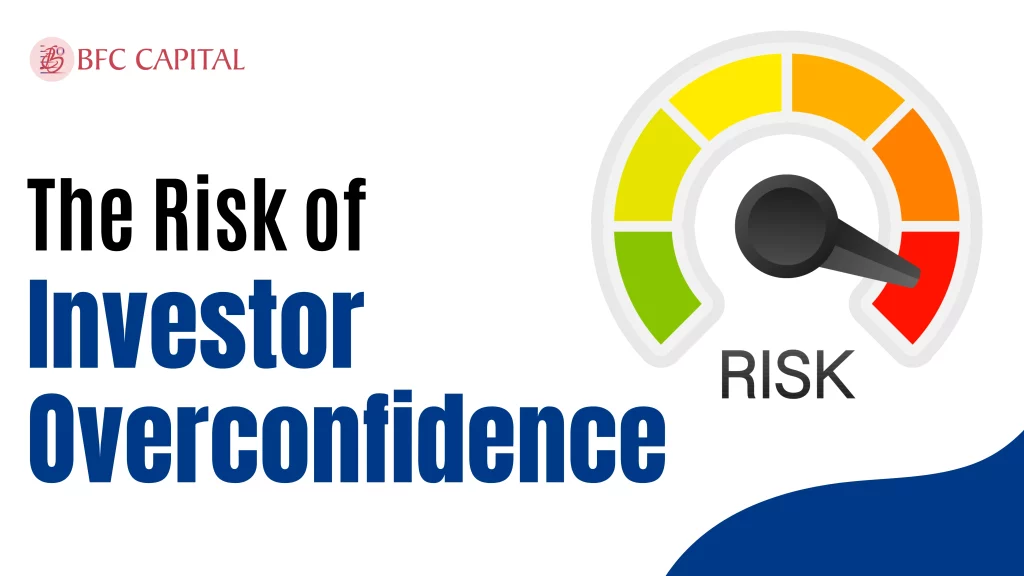
Overconfidence Bias
Have you ever felt too sure about a stock pick? Too sure. Thought, “This one’s a guaranteed winner,” and overcommitted only to have it wane?
Welcome to the world of overconfidence bias—one of the more subtle and dangerous traps in investing.
Now, let’s put it simply, go over a real-life example, and see how this strange phenomenon can silently destroy your portfolio at a time when you think you are doing everything right.
What is Overconfidence Bias?
Overconfidence bias is a sort of psychological tendency where an investor feels he has better knowledge, skills, or ability to predict something in the markets. It’s not about hope- it’s about over-confidence.
This bias can have certain ramifications on an investor’s actions, such as:
- Taking too many risks
- Ignoring red flags or market signals
- Over-trading
- Not diversifying properly
In layman’s terms, you think you are smarter than the market. Spoiler alert: You are not.
Meet John Doe: A Case of Costly Confidence
Let us meet John Doe, a young finance professional.
He/she learned all about markets, followed influencers, and saw every YouTube finance guru worth a mention. With that great confidence and Excel, he/she began managing her portfolio. In 2020, he/she bought tech shares and made a 40% capital gain over six months. That early win inflated his/her confidence in believing they had cracked the code. So, he/she started to:
- Skipping research
- Ignoring risk
- Investing based on “gut feeling”
- Increasing the size of her bets
In late 2022, the strong conviction burning in his/her heart compelled to load a whopping 70% of her portfolio into one “surefire” fintech startup stock. Down it went. The consequence: this one fateful decision wiped out three years of gains. What makes it just that much worse is that he/she never saw it coming. He/she was completely blind to it because of his/her belief in their own investment expertise.
How Overconfidence Bias Affects Portfolio Management
Portfolio management must walk a tightrope of logic, discipline, and emotional control. Overconfidence disturbs all three.
1. Poor Diversification
Overconfident investors assume they just need a few “good” stocks. So they create highly concentrated portfolios, thereby increasing downside risk while lowering risk-adjusted returns.
John Doe’s mistake? She put too much on the one stock.
2. Excessive Trading
They trade most of the time, thinking they can time the market and consistently pick winners. However, research indicates that more trading typically results in worse returns.
3. Ignoring Risk
When it’s overconfidence, risk almost always disappears from your radar. You tend not to hedge and even forget about a stop loss. When the market turns, that’s a career-threatening move.
4. Confirmation Bias
Overconfidence may be accompanied by a confirmation bias, that is, filtering only the information that backs their view while ignoring any evidence against it.
The Psychology Behind Overconfidence
It’s more than arrogance; it’s just human nature.
Here’s how we fall in:
- Illusion of Control: We think we have more control over outcomes than we actually do.
- Hindsight Bias: We remember our wins and forget our losses.
- Self-attribution: We credit success to skill, and blame failure on luck or external events
What Does Research Say?
According to Barber and Odean, overconfident investors tend to trade much more than others, by 45% more, yet they earn significantly less than passive investors. Another study found that men are more prone to overconfidence biases than women, which results in more trading and inferior performance.
This is not just theory; data backs it up.
The Ripple Effect on Long-Term Goals
Planning one’s set and dressing it down with confidence means:
- Chasing short-term gains
- Derailing the makeup of a long-range financial plan
- Missing compound advantages given a poor asset allocation
With time, this little behavioural quirk will grow into a great barrier to wealth creation.
Spotting the Signs of Overconfidence
Warning signs:
- Making major portfolio changes without a compelling rationale.
- You quit studying and start following your “intuition.”
- Certain that whatever you do is correct.
- Being oblivious to any feedback or market warnings.
If you recognise some or all of these patterns, it is time to stop and reassessment.
How to Control Overconfidence in Investing
1. Diversify your Portfolio
Don’t put your money into just a handful of “favourite” stocks. You do want to spread it over sectors and asset classes.
2. Have a Plan—and Stick to It
Investment objectives, risk tolerance, and time horizon are set as the guiding factors in making investment decisions. Avoid making any decision based on emotions.
3. Review, But Do Not Overreact
Review your portfolio from time to time—not every day. Changes made on an emotional basis almost never turn out well.
4. Use Facts
Let your decisions be guided by facts and research, not by intuition, social media, or market gossip.
5. Check with a Pro
A third-party opinion, like one from a financial advisor, can assist in battling that bias.
Also, Check – Why SID, KIM & SAI Matter Before Investing in Mutual Funds
The Takeaway
Overconfidence bias may seem harmless and inconsequential; however, it is one of the silent killers of investment performance. Just like John Doe, many investors fall prey to it, knowingly or unknowingly, and suffer the consequences.
The key to successful portfolio management is not only picking the right assets but also managing your investor behaviour.
Confidence is good. But some degree of cautiousness informed by good judgment goes further.
Invest smart. Stay humble.
Please share your thoughts on this post by leaving a reply in the comments section. Contact us via Phone, WhatsApp, or Email to learn more about mutual funds, or visit our website. Alternatively, you can download the Prodigy Pro app to start investing today!
Disclaimer – This article is for educational purposes only and does not intend to substitute expert guidance. Mutual fund investments are subject to market risks. Please read the scheme-related document carefully before investing.