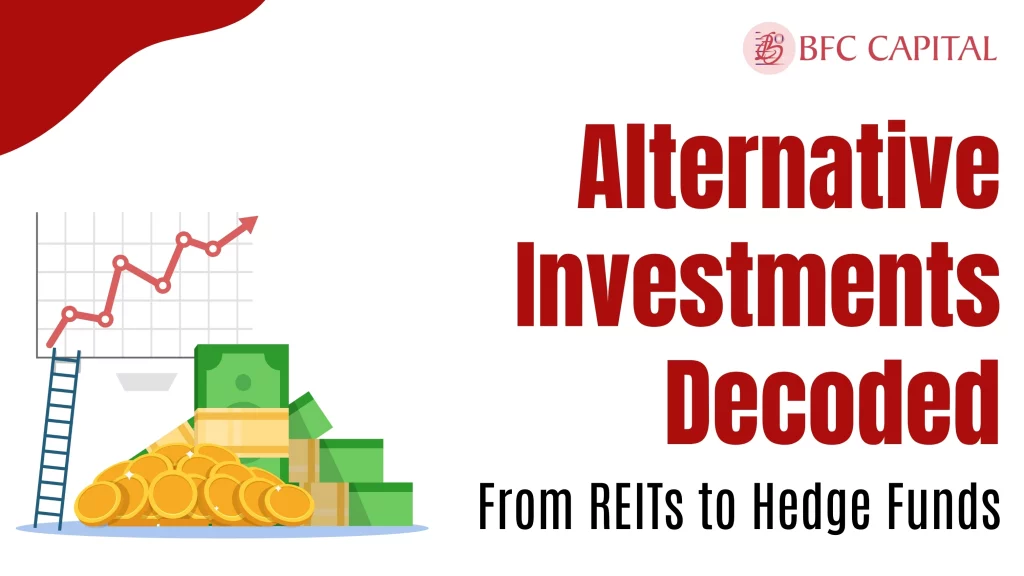
Alternative Investments
As a continuously dynamic financial environment persists, more investors are resorting to alternative investments as a source of diversification for their assets and access to opportunities outside standard traditional assets in the form of stocks and bonds.
This blog delves into the critical impact of alternative investments—hedge funds, Real Estate Investment Trusts (REITs), commodities, and private credit—as they elevate investment strategies.
After examining each category’s features, advantages, and drawbacks, we will provide a complete view of the potential for using these assets to diversify, return, and manage risk at the contemporary market speed. Whether you’re an experienced investor trying to streamline your strategy or an entry-level investor looking to broaden your economic vision, reviewing alternative investments may provide worthwhile insights for long-term financial success.
Diversification of Portfolios: The Benefits of Adding Alternative Investments
Portfolio diversification is a wise decision that dramatically lowers risk and increases potential gain.
Adding other investments, such as real estate, commodities, or private equity, offers phenomenal opportunities that stocks and traditional bonds cannot provide.
Alternative investments respond differently to the market environment and serve as helpful shock absorbers.
Entertaining more kinds of investments diversifies your overall portfolio and positions you for more financial growth and security in a challenging market.
Evaluating Hedge Funds: Understanding Their Strategies, Risks, and Potential Returns
Hedge funds are about examining their functioning, the risk they assume, and the returns they can yield.
- Strategies: Hedge funds use different strategies to earn a profit. Some invest in stocks, others in bonds or commodities. They also use sophisticated techniques such as short selling, leverage, and derivatives to maximise returns.
- Risks: It is a risky investment in hedge funds. The operating styles can generate huge losses and uneven performance. Hedge funds also invest in illiquid assets that are hard to sell.
- Potential Returns: Hedge funds have the potential to return much more than other investments but with no guarantee. However, high returns come with high risks, and the investors must know what they are getting into.
All in all, one must learn about hedge funds’ tactics, the risks involved, and their potential returns.
REITs: Using Real Estate to Earn Income and Build
REITs, or Real Estate Investment Trusts, enable the investment in real property that yields income without actual ownership. They purchase, own, or finance property; investors receive dividends from the revenue generated.
REIT types:
- Equity REITs: Invests directly in income-generating properties and collects rent revenues.
- Mortgage REITs (mREITs): Invests in mortgages or mortgage-backed securities and collects income on interest.
- Hybrid REITs: Combines equity and mortgage strategies.
Why Do Investors Prefer REITs?
- Generation of Income: High dividend yields.
- Liquidity: Readily traded on stock exchanges.
- Diversification: Exposure to a broad portfolio of property.
- Inflation Hedge: Ability to hold and appreciate value.
- Professional Management: Hands-free investment with professional management.
Commodities and Private Credit: Interpreting Market Tides and Opportunity to Invest
Commodities like oil, gold, and crops are essential for trade and investing. Investors track commodity trends to predict market actions and potential openings. For example, an oil price increase can indicate higher demand and investment possibility in the commodity’s related segments.
What is Private credit?
Private credit is borrowing to private firms rather than public ones, with a return in interest. The asset class can be desirable in low-return environments or for investors seeking more yields.
Why Invest in Commodities?
- Hedge Against Inflation: Commodities are an inflation hedge because their value increases with a decrease in purchasing power.
- Diversification: Portfolio investment in commodities minimises risk and increases returns because they have a low correlation with stocks and bonds.
Methods of Investing in Commodities
- Direct Investment: Purchasing physical commodities like gold or oil, though it entails protection and storage.
- Futures and Options: These are investment instruments used to purchase or sell commodities at a set price in the future for experienced investors.
- ETFs: Commodity ETFs track the price of a specific commodity or basket with less hassle without ownership.
Rising Alternative Investment Trends: What to Look Out For?
Some of the most influential trends driving the alternative investments market include the following:
- Sustainability Trend: Investors increasingly desire sustainable investing, which involves the desire for assets that positively affect the environment and society.
- Adoption of Technology: Blockchain technology increases transparency and security in holding and trading alternative assets.
- Private Investment Access: New platforms enable retail investors to trade private equity and property markets and make these assets more accessible.
- Digital Assets: Digital assets such as cryptocurrencies and others are becoming more popular, piquing retail and institutional investors’ interest as a new asset class.
- Global Diversification: Investors are considering markets beyond domestic markets and seeking out emerging markets in search of enhanced growth opportunities.
- Generation of Yield: Investors have higher appetites for assets that generate returns in times of low interest rates, including real estate and private credit, that offer superior returns.
Following these trends will lead investors to savvy choices in the ever-changing world of alternative investments.
Also, Check – Best Mutual Funds to Invest in 2025
On a parting note…
Alternative investments, including hedge funds, REITs, commodities, and private credit, are needed to diversify and add return to portfolios beyond traditional investments. Each is distinct in its benefits and associated risks that can add up to a solid investment approach. By knowing these alternatives, investors can position themselves better for long-term success in the rapidly changing financial world. Embracing alternative investments has the potential for greater strength and growth, thus making it a valuable asset to portfolio management in the present era.
Please share your thoughts on this post by leaving a reply in the comments section. Contact us via phone, WhatsApp, or email to learn more about mutual funds, or visit our website. Alternatively, you can download the Prodigy Pro app to start investing today!
Disclaimer: This article is for educational purposes only and does not intend to substitute expert guidance. Mutual fund investments are subject to market risks. Please read the scheme-related document carefully before investing.