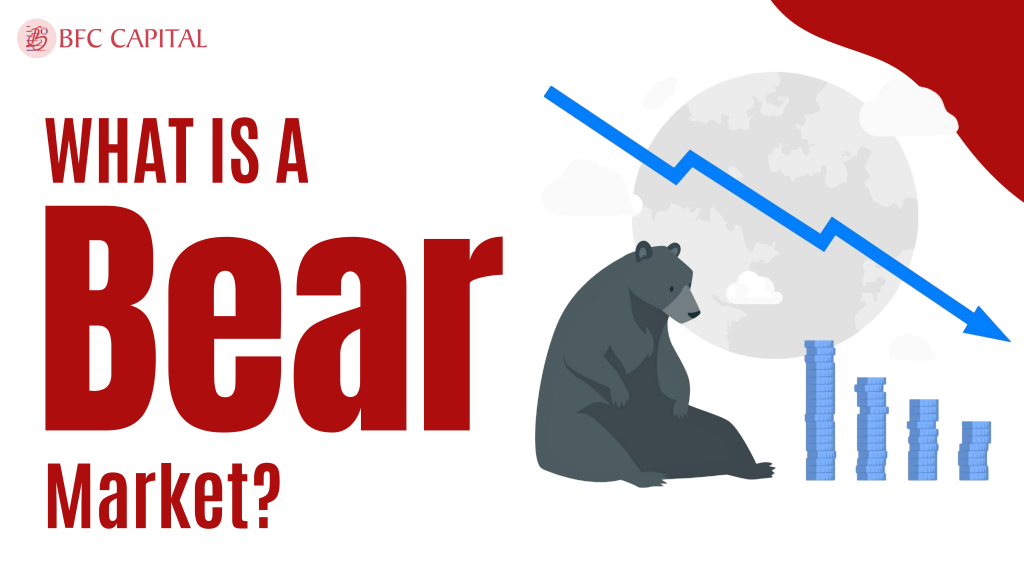
Bear Market
Are you an investor or a trader? Have a look at the basics of the Bear Market. Do you know why a Bear market is called so? The term “bear market” comes from the way a bear attacks its prey.
When a bear attacks, it swipes its paws downward. Similarly, a bear market is characterised by a downward trend in stock prices. That means a bear market is a type of market situation in which a market or the price of a stock falls over a certain period. We’ll give you a basic understanding of how the bear market works and how it would help investors to grow even when there is a market dip.
What is a Bear Market?
A bear market is the condition of a market wherein the price drops and falls during a given period. In general, a bear market is determined when the value of an investment has dropped by 20% or more, below its recent price.
That is, the long-term tendency of stock prices to fall defines the bear market. At least 20% or more of the stated market values have to be eroded before the market qualifies as bear territory.
How to Recognize a Bear Market?
Here is, therefore, how you can tell whether it is a bear market:
1. Falling Stock Market Indices
A bear market is defined as a situation in which the key benchmark indices in a given country have trended downwards, and investors are even placing their money in other risk-free instruments instead of investing in the stock market.
However, to declare such a bear market needs to exist in a situation where such index values are lower by more than 20% and this has been for sixty days or more. It helps to distinguish variations in the stock markets due to outside factors or any type of uncertainty existing in the economy, which would have limited persistence.
2. Recession
A bear market tends to be characterised by a recession; therefore, it can be easily identified once it occurs. Specific indicators to focus on are two or more quarters of shrinking GDP, unemployment rate increases and the decline in corporate earnings. As economic activity slows down, spending on consumption and capital investments reduce, thereby lowering equity values. Also, any decline in the consumer and business confidence indicates that the economy is deteriorating. These recession indicators are most effective when they are accompanied by a significant and sustained decline in stock market indices marking a bear market condition. It is also helpful to monitor these factors as they can give specific information regarding the conditions of the market.
Causes of a Bear Market
1. Unexpected Fluctuations
It can result from several other causes, such as socio-political and economic instability in the country. Due to the relationship between political decisions and the performance of corporate entities that invest in an economy, overall investments are bound to suffer.
2. Global Mindset
As the level of integration among the world’s countries increases, instability in a large leading economy will trigger consequences in a domestic economy.
Consider the 2008 financial crisis as an analogy: Sometimes, it may take the form of a significant financial event that originated far off as in the case of a global financial meltdown which affects global markets. Even geographically, the Indian stock market did not remain an isolated entity and saw its share of turmoil during the crisis. This reality implies that bearish patterns in other countries could have an echo in the domestic markets and thus it is worthwhile to invest in diverse assets.
3. World Recession
A global recession can cause a pessimistic outlook for investors and create a bearish trend in stock markets, functioning all around the world. Depending on various other geo-economic factors of the stock markets, having listed companies a world recession can negatively impact their prices causing the market to plummet. The market becomes volatile because investors panic for safety of their investment.
These stock market movements are common in large, mid, and small-cap firms. However, more impact is seen on small and mid-cap enterprises as they are less stable.
Impacts of a Bear Market
Bear markets can have significant and far-reaching impacts on the economy, businesses, and individual investors:
1. Increased Unemployment
During a bearish market, economic activity is low and hence returns are low, thus companies try to decrease their expenses because when consumers pull back on spending, it can hurt a company’s sales and revenues. Even after a bearish run, companies cut on expenses and try to reduce workforce and hence a longer duration of bearish trend can have negative impacts on employment opportunities.
2. Increased Bankruptcies
Many businesses with low economic strength can barely persevere through the bear markets, especially if they have high liabilities. Losses in revenues and a decrease in credit accessibility can trigger bankruptcy, thereby deepening the economy’s contraction.
3. Psychological Impact
It is crucial to recognize that bear markets can be very psychological for investors. Emotions like fear and panic may cause further volatility, and therefore, people can make wrong decisions, including selling at the low end of the market. This can increase the depth of market declines and prolong the existence of a bear market.
4. Long-term Opportunities
Bear markets are attributed to selling and fall in price and hence people fear investing. But they are great long-term investment opportunities. Professional investors who are capable of buying stocks when they are down in the market may enjoy great benefits when the market starts regaining its footing.
Wrapping Up
Everyone who is into investing or trading should understand the bear market. It helps you to be aware and grow even during a downturn in the market. It gives you an idea about how you can benefit even from the downs in the market happening. So one must understand the unexpected fluctuations and the impact the bear market has in both positive and negative ways. After knowing all this you can get the best out of it.
Please share your thoughts on this post by leaving a reply in the comments section. Also, check out our recent post on: “Investing Wisdom: Why Starting Early Matters, But It’s Never Too Late“
To learn more about mutual funds, contact us via Phone, WhatsApp, Email, or visit our Website. Additionally, you can download the Prodigy Pro app to start investing today!
Disclaimer – This article is for educational purposes only and by no means intends to substitute expert guidance. Mutual fund investments are subject to market risks. Please read the scheme related document carefully before investing.





Name: Simple Interest: Meaning, Formula, and How to Calculate?
says:[…] Please share your thoughts on this post by leaving a reply in the comments section. Also, check out our recent post on: “What Is A Bear Market?“ […]