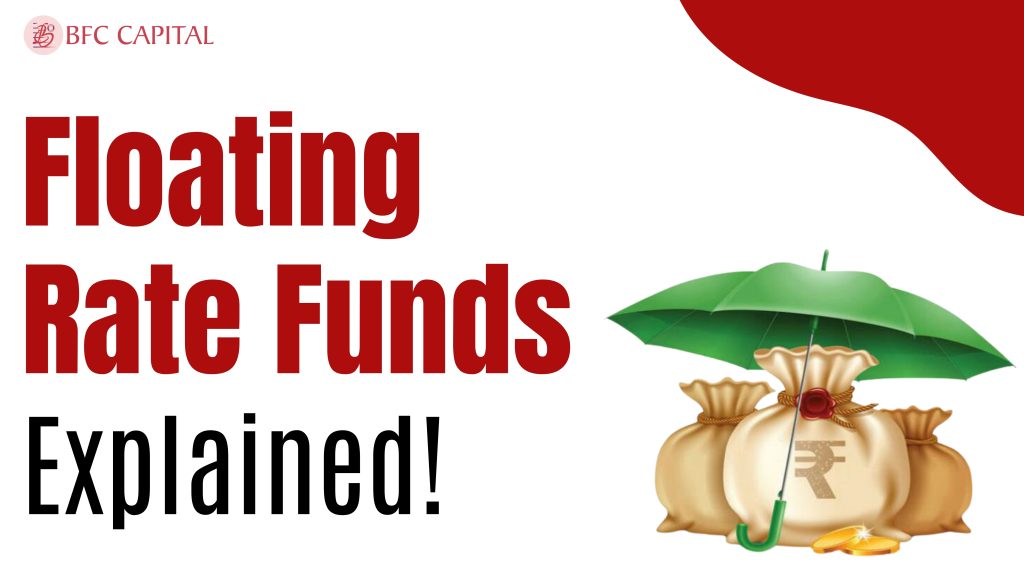
It’s very uncommon to hear about floating rate funds when interest rates have been dropping for a long time. This is because any rate decrease gives rise to bond yields dropping, which elevates bond prices. So, when rates are dropping, bondholders and bond fund holders generally stand to obtain significantly. However, while rates are elevating, the opposite is true. Bond owners and bond fund holders go through financial losses when rates rise because when rates elevate because the bond’s price drops. Investing in floating rate funds is one of the options which is available to investors.
What are floating rate funds?
Floating rate funds are a sort of mutual fund that invests in debt securities whose interest rates change with fluctuation in market interest rates. These funds are also popularly known as adjustable rate funds or variable rate funds.
As opposed to general fixed-income investments, floating-rate funds are becoming a more and more famous choice for investors anticipating to both protect themselves against interest rates and possibly increase their profits.
How do floating rate funds work?
Floating rate funds generally buy bank loans also popular as senior loans. which are debt given out by companies with lower credit ratings. Since these adjustments can be carried out quickly and effortlessly, the yield on these floating-rate bonds strikes other types of bonds with steady interest rates in a scenario where interest rates rise. Floating rate funds can only be beneficial in an environment where yields are increasing with interest rates. Floating rate funds generally underachieve other fund classes in the majority of other frameworks.
Since floating rate funds conduct investments in substandard bonds, they come with a risk. Because bank loans are paid back before other types of debt and have strong support, these funds are considered safer than high-yield bond funds.
Features of a Floating Rate Fund
| Feature | Description |
| Diversified Portfolio | Invests in various assets with different rates, leading to quality returns over time. |
| Less Risk | Generally safer than equity funds but still has some credit risk. Look for high-credit-rating securities. |
| High Returns | Potential for higher returns compared to fixed deposits and other debt instruments, especially if interest rates rise. |
| Open-ended Schemes | Allows investment based on personal financial goals, needs, and time horizon. |
Types of Floating Rate Fund
| Type of Floating Rate Fund | Description |
| Short-term Floating Rate Fund | Invests in debt instruments with high liquidity and short-term maturities, such as government securities and T-bills. |
| Long-term Floating Rate Fund | Invests in debt instruments with long-term maturities. Primarily in floating rate instruments, but also includes money market or fixed floating rate instruments. |
Limitation of Floating Rate Fund
| Limitations | Description |
| Higher Fees | Floating rate funds often have higher annual fees and possible sales charges. These fees can reduce your returns. |
| Leverage Risks | Many funds use borrowed money to try for higher returns. This can lead to bigger losses if investments don’t perform well. |
| Redemption Challenges | Some funds limit when you can withdraw or sell your shares. This can be an issue if you need quick access to your money. |
Regulations of Sebi Regarding Floater Funds
The only requirement is that a minimum of 65% of the fund must be distributed to either fixed-rate bonds changed into floating-rate bonds or floating-rate instruments.
Moreover, the few investments in the fund must match the rules for maturity, credit quality, and other standards set by the fund manager. This helps the fund managers follow the regulations.
Taxation on Floating Funds – As we know floating funds comes under the debt category, there the gains generated while investing this funds are added in the income of an individual an taxed as per their income tax slab.
Conclusion
Be very sure you understand how these funds work before you move further.
When the RBI raises rates, these types of funds may have a 1-2 year investment horizon with an unperformed advantage. As compared to what some people trust, this is not a magical drug. Liquid funds and other money market funds have less fluctuations than floating rate funds when investing for less than one year.
Floating rate funds can be a great incorporation to a fixed-income portfolio for investors searching for protection against towering interest rates and the possibility for higher returns.
Please share your thoughts on this post by leaving a reply in the comments section. Also, check out our recent post on: “What’s a REITs (Real Estate Investment Trust)?“
To learn more about mutual funds, contact us via Phone, WhatsApp, Email, or visit our Website. Additionally, you can download the Prodigy Pro app to start investing today!
Disclaimer – This article is for educational purposes only and by no means intends to substitute expert guidance. Mutual fund investments are subject to market risks. Please read the scheme related document carefully before investing.






Name: REITs vs. Real Estate Mutual Funds: What's the Difference?
says:[…] Please share your thoughts on this post by leaving a reply in the comments section. Also, check out our recent post on: “What Is a Floating Rate Fund? Definition, Example and Limitations“ […]